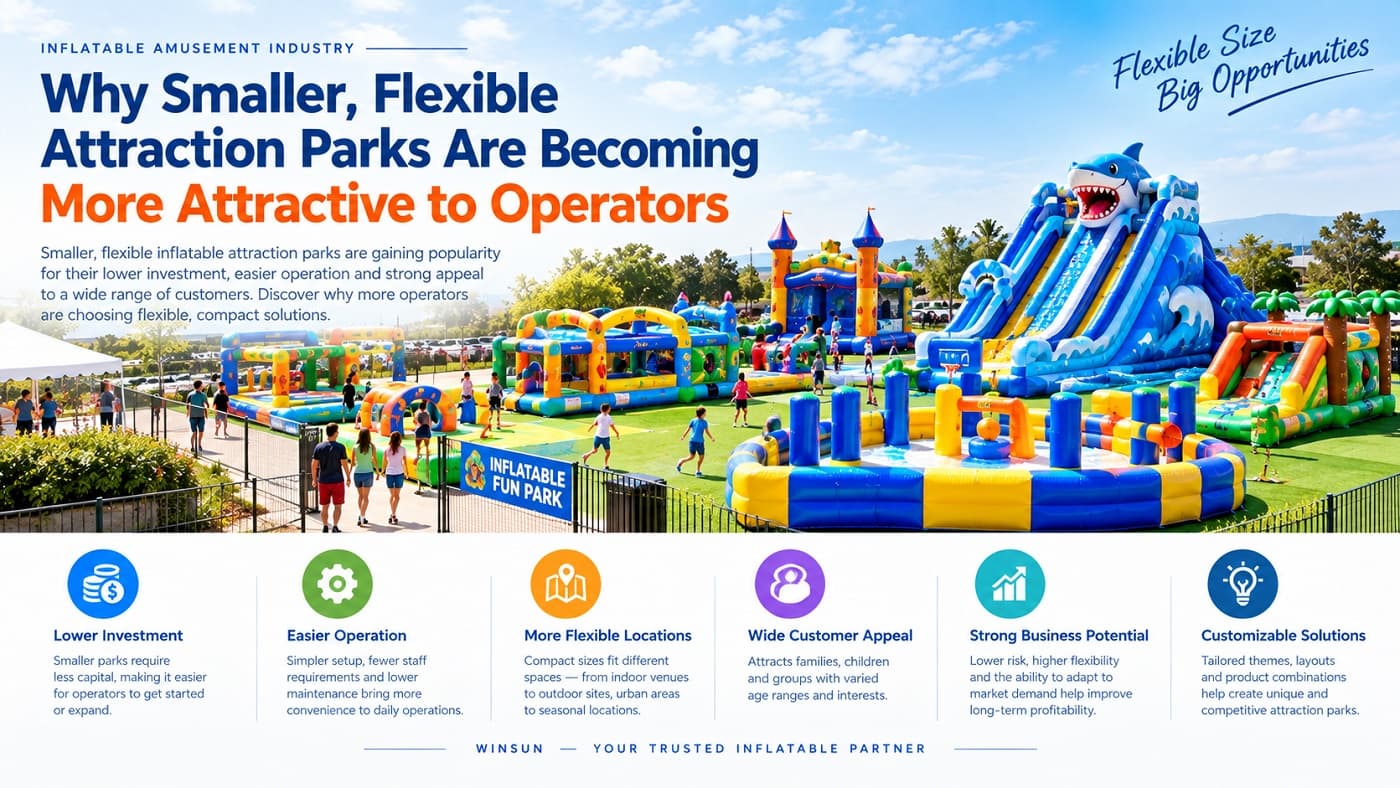
The amusement industry is evolving, and operators are rethinking how they invest in new attractions. While large theme parks and destination entertainment projects continue to play an important role in the market, smaller and more flexible attraction parks are becoming an appealing option for many businesses.
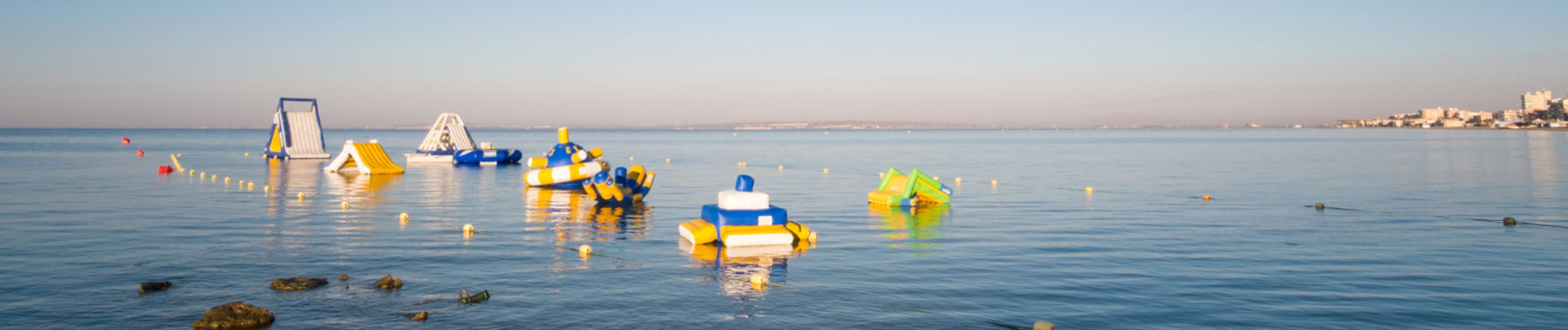
From inflatable adventure parks and temporary outdoor play zones to compact family entertainment areas and seasonal water parks, these attractions offer operators more ways to create engaging experiences without necessarily committing to a large, permanent facility.
For rental companies, event organizers, resorts, shopping centers, and independent amusement operators, flexibility can be just as important as the size of the attraction itself.
As a professional inflatable amusement product manufacturer and supplier, WINSUN understands the growing need for adaptable entertainment solutions. In this article, we explore why smaller attraction parks are attracting more attention and how inflatable products can help operators turn available space into engaging entertainment experiences.
1. Lower Initial Investment and More Flexible Budget Planning
One of the main advantages of a smaller attraction park is the opportunity to start with a more manageable investment.
Developing a large permanent amusement park may require substantial spending on land, buildings, infrastructure, equipment, staffing, and long-term maintenance. Smaller attraction parks can offer a more accessible starting point, depending on the venue, product selection, and operating model.
Inflatable attractions provide several options for operators who want to build an entertainment business or expand an existing one.
For example, an operator might begin with:
• A commercial inflatable bounce house and combo unit
• An inflatable obstacle course
• A collection of interactive inflatable games
• A small inflatable water play area
• A themed inflatable playground
• A combination of slides, climbing features, and activity zones
The business can then expand its attraction lineup as demand grows and operating experience improves.
This approach allows operators to plan investment in stages rather than purchasing an extensive collection of equipment from the beginning.
However, a smaller inflatable park still requires careful budgeting for site preparation, transportation, installation, staffing, insurance, utilities, safety measures, and maintenance. The total investment depends on the project and its local operating requirements.
2. Flexible Locations Create More Business Opportunities
Traditional amusement facilities are often tied to a fixed location. Smaller inflatable attractions can offer greater flexibility in where and when entertainment is provided.
Depending on the product design and site requirements, inflatable attractions can be installed in a variety of settings, including:
• Outdoor recreational spaces
• Shopping centers and commercial venues
• Resorts and holiday destinations
• Schools and community facilities
• Festivals and seasonal events
• Private event venues
• Temporary entertainment zones
• Suitable indoor activity spaces
This flexibility creates opportunities for operators to serve different customer groups throughout the year.
For example, a rental company may use inflatable obstacle courses and bounce houses for school events, community festivals, and private parties. A resort may install a themed inflatable play area during its peak holiday season. An event organizer may develop a temporary attraction zone to increase visitor engagement at a local festival.
The key is to select products that match the intended location and can be transported, installed, secured, and operated appropriately.
Not every inflatable is suitable for every venue. Ceiling height, ground conditions, weather exposure, anchoring requirements, electrical access, and local regulations must all be considered before installation.
3. Easier Expansion and Attraction Mix Adjustments
A smaller attraction park does not need to be a fixed collection of products.
One of its biggest advantages is the ability to adjust the attraction mix according to customer demand, available space, and business performance.
An operator may begin with a basic combination of inflatables and later introduce new products to refresh the experience.
For example:
Phase 1: Establish the attraction
Start with a bounce house, an inflatable slide, and a compact obstacle course.
Phase 2: Add interactive activities
Introduce sports games, target games, or multi-player inflatable challenges.
Phase 3: Develop a themed experience
Coordinate colors, graphics, and product designs to create a more distinctive attraction area.
Phase 4: Expand into specialized entertainment
Depending on the market, add water slides, inflatable pools, or larger adventure attractions.
This phased approach can help operators test demand before making additional investments.
It also allows businesses to respond to changing customer preferences without completely redesigning the venue.
For inflatable manufacturers, this creates opportunities to supply individual products as well as coordinated attraction packages that can support future expansion.
4. Smaller Parks Can Serve Multiple Customer Groups
A successful attraction park needs to offer activities that match the interests of its target audience.
Smaller parks can be designed around a specific customer group or combine several types of attractions to appeal to a broader market.
For example:
Family-focused attractions: Colorful bounce houses, compact slides, and themed play structures for younger children.
Active adventure attractions: Obstacle courses, climbing challenges, and multi-lane slides for older children and teenagers.
Group entertainment: Competitive inflatable games, team challenges, and interactive sports activities for schools, camps, and corporate events.
Seasonal attractions: Halloween inflatables, holiday-themed play areas, and summer water attractions.
Resort and hospitality entertainment: Custom-designed inflatable play zones that complement a resort’s existing facilities.
Choosing the right combination is essential. A park designed primarily for toddlers will have different product requirements from one focused on competitive challenges or family group activities.
A clear target audience also helps operators make better decisions about product dimensions, attraction capacity, theme, and pricing strategy.
5. Flexible Designs Make Better Use of Available Space
Land and floor space can be expensive or difficult to obtain, particularly in urban areas and commercial venues.
Smaller attraction parks allow operators to work with the space they already have rather than relying on a large, dedicated site.
Inflatable products are available in many shapes, sizes, and configurations, making it possible to develop attraction layouts around different site conditions.
Depending on the project, a compact inflatable park might combine:
• One central inflatable combo
• A short obstacle course
• Several interactive games
• A dedicated area for younger children
• A themed inflatable feature
• A small water play zone
The arrangement should allow sufficient space for entrances, exits, visitor circulation, staff access, queues, and required safety clearances.
Operators should evaluate the complete installation footprint rather than simply adding together the dimensions of individual products.
A well-planned layout can make a limited area more engaging without overcrowding the site.
For manufacturers, custom dimensions and configurations can help customers make better use of their available space while maintaining appropriate operating and safety requirements.
6. Faster Setup and More Convenient Operations
For temporary events, seasonal attractions, and rental businesses, setup and takedown can significantly affect operating efficiency.
Inflatable attractions can be an attractive option because many products are designed to be deflated, packed, transported, and installed again when needed.
However, setup requirements vary according to product size, construction, inflation method, and installation environment.
When selecting products, operators should consider:
• Number of staff needed for installation
• Inflation and deflation procedures
• Transportation and storage dimensions
• Blower and electrical requirements
• Anchoring and securing systems
• Cleaning and drying procedures
• Inspection and maintenance access
• Manufacturer-provided operating instructions
Continuous-air inflatables typically require a blower to maintain pressure during operation. Airtight inflatables use sealed chambers to retain air and have different inflation and maintenance requirements.
Understanding these differences helps operators select products that suit their staffing, logistics, and operational plans.
For businesses that move attractions between venues, efficient packing and practical installation procedures can be just as important as the attraction’s appearance.
7. Themed Attractions Help Smaller Parks Stand Out
Smaller parks may not compete with major theme parks in terms of size, but they can still create memorable experiences through distinctive themes and coordinated designs.
Themed attractions help transform a collection of individual inflatables into a more unified entertainment environment.
Popular concepts include:
• Ocean and underwater adventures
• Jungle and safari experiences
• Dinosaur exploration
• Space and futuristic worlds
• Sports and competition
• Candy and fantasy themes
• Farm and countryside adventures
• Halloween and holiday attractions
For example, an operator could combine an ocean-themed inflatable slide, matching obstacle course, and interactive marine games to create a compact ocean adventure park.
A coordinated theme can also support marketing campaigns, promotional photography, seasonal events, and brand recognition.
Customization does not have to mean developing every product from scratch. Depending on the project, operators may combine existing product designs with customized colors, graphics, logos, and selected functional features.
This gives businesses different ways to create a distinctive attraction while managing design complexity and budget.
8. Seasonal and Temporary Parks Offer Additional Opportunities
Not every entertainment business needs to operate a permanent park throughout the year.
Temporary and seasonal attraction parks can be suitable for businesses that want to take advantage of specific periods of high demand.
Examples include summer water attractions, school holiday activities, holiday festivals, community celebrations, and promotional events.
Inflatable products can support these business models because many can be packed away when they are no longer required, provided they are properly cleaned, dried, inspected, and stored.
Seasonal operation also gives businesses opportunities to test new markets or concepts before committing to a permanent installation.
For example, an operator could introduce a small inflatable play zone at a summer event to evaluate visitor interest. If the concept performs well, the business may consider expanding the attraction lineup or repeating the event in future seasons.
Of course, temporary operation still requires appropriate site permissions, staffing, insurance, safety procedures, and compliance with local requirements.
Flexibility provides more options, but successful operation still depends on planning and execution.
9. Commercial Value Depends on More Than Park Size
A smaller attraction park can offer an attractive business opportunity, but size alone does not determine profitability.
Operators should evaluate how the attraction will generate revenue and what it will cost to run.
Important factors include:
• Initial equipment investment
• Site rental or preparation costs
• Transportation and installation
• Staffing requirements
• Electricity and operating expenses
• Maintenance and repair
• Visitor capacity
• Ticket pricing and package options
• Seasonal demand
• Expected equipment utilization
For example, a compact inflatable park may be used for general admission, birthday parties, school events, private bookings, or seasonal promotions.
The most suitable revenue model depends on the local market and the operator’s target customers.
It is also important to consider the useful life of the products. A durable, well-maintained attraction that is used regularly may provide better long-term value than a cheaper product that requires frequent repairs or replacement.
Before investing, operators should estimate realistic demand, operating costs, and revenue under different scenarios.
A smaller, flexible attraction park is not automatically more profitable, but its adaptable structure may give operators more options for managing risk and adjusting their business model.
10. Choosing the Right Inflatable Manufacturer Matters
The success of a smaller attraction park depends partly on choosing products that work well together and suit the intended operating environment.
A professional manufacturer should understand more than product appearance. The supplier should be able to discuss dimensions, construction, materials, inflation systems, installation requirements, customization options, and product maintenance.
When evaluating a supplier, operators should consider:
Product range: Can the manufacturer provide the different attraction types required for the project?
Customization capability: Can product designs be adapted to the available space, theme, and target users?
Construction quality: Are material specifications, manufacturing methods, and quality-control procedures clearly explained?
Project coordination: Can the supplier help coordinate multiple products into a consistent attraction concept?
Technical information: Can the supplier provide relevant installation, operation, inspection, and maintenance guidance?
After-sales support: Is there a clear process for technical questions, repairs, and replacement parts?
For projects involving several attractions, working with a manufacturer that understands the overall concept can simplify product selection and help maintain consistency across the park.
How WINSUN Supports Flexible Inflatable Attraction Projects
As a professional inflatable amusement product manufacturer and supplier, WINSUN provides a broad range of inflatable products for commercial entertainment, events, rental businesses, and amusement projects.
Our product categories include:
• Commercial bounce houses and inflatable combo units
• Inflatable slides
• Inflatable obstacle courses
• Interactive inflatable games
• Sports inflatables
• Themed inflatable playgrounds
• Inflatable water attractions
• Floating water park products
• Airtight inflatable structures
• Customized OEM/ODM inflatable solutions
We understand that every project has different requirements. Some customers need a few products for a rental business, while others want to develop a compact family entertainment area, a seasonal attraction park, or a themed activity zone.
Depending on the project, we can work with customers on product selection, dimensions, colors, graphics, functional configurations, and coordinated attraction concepts.
Our goal is to help customers identify practical inflatable solutions that match their available space, intended audience, operational needs, and investment plans.
Whether you are starting a new attraction business or expanding an existing entertainment venue, choosing the right product combination is an important first step.
Final Thoughts: Flexibility Creates More Possibilities
Smaller, flexible attraction parks are becoming an appealing option for operators because they can offer more adaptable approaches to investment, location, product selection, and business development.
Their advantages may include more manageable starting budgets, opportunities for phased expansion, flexible seasonal use, customized themes, and more efficient use of available space.
For inflatable amusement operators, the key is not simply to build a smaller park. It is to develop an attraction concept that matches the target audience, operating environment, and commercial objectives.
With suitable product selection, careful layout planning, reliable construction, and effective operations, a compact inflatable attraction park can become a valuable addition to a wide range of entertainment businesses.
At WINSUN, we believe that successful amusement projects begin with understanding the customer’s needs and finding the right solution for the space, audience, and business model.
WINSUN — Your Professional Inflatable Amusement Partner.
Contact our team to discuss customized inflatable attractions for your next park, event, or entertainment project.
About WINSUN:
WINSUN is a premier integrated designer, manufacturer, and global exporter of high-end inflatable amusement equipment. With over 19 years of specialized experience serving the European and North American markets, the company offers a comprehensive range of products, including inflatable water parks, slides, bounce houses, obstacle courses, and large-scale custom themed attractions. Headquartered in Zhengzhou with manufacturing facilities in Pingdingshan and a dedicated U.S. office and warehouse, WINSUN is committed to delivering safe, innovative, and commercially successful entertainment solutions worldwide.
Media Contact:
Marketing Department
Email: Info@winsuninflatables.com
Website: www.winsuninflatables.com
Copyright © 2007-2026 HOP WINSUN Inflatables. all rights reserved Power by Power by Sinoart.