What Determines the Lifespan of Inflatable Bounce Houses, Water Slides, Obstacle Courses, and Air Structures?
Commercial inflatables are built for repeated use, transportation, and exposure to outdoor environments. Whether used for rental businesses, amusement parks, schools, events, or entertainment centers, one of the most common questions buyers ask is:
“How long will a commercial inflatable last?”
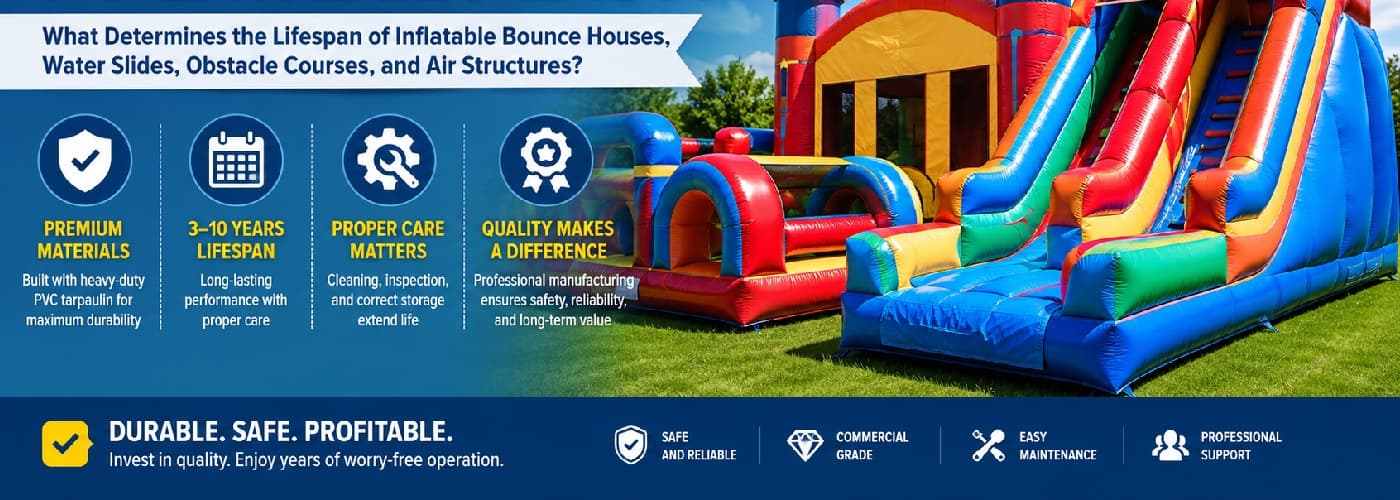
The answer depends on several important factors, including material quality, manufacturing standards, maintenance routines, usage frequency, and storage conditions. With proper care and professional manufacturing, high-quality commercial inflatables can typically last 3–10 years or even longer.
Average Lifespan of Different Commercial Inflatables
Below is a general estimate for various types of inflatable products under normal commercial use conditions.
| Inflatable Type | Estimated Lifespan |
|---|---|
| Commercial Bounce Houses | 5–8 Years |
| Inflatable Water Slides | 3–6 Years |
| Obstacle Courses | 4–7 Years |
| Inflatable Theme Parks | 5–10 Years |
| Inflatable Tents & Air Structures | 5–10+ Years |
| Sealed Air Inflatables | 4–8 Years |
These estimates assume proper operation, routine cleaning, timely repairs, and suitable storage practices.
1. Material Quality Is the Biggest Factor
The lifespan of an inflatable begins with the material.
Professional commercial inflatables are typically made from:
• 0.55mm PVC Tarpaulin (18oz PVC Vinyl)
• Heavy-duty reinforced polyester fabric
• UV-resistant and waterproof coatings
• Double or quadruple stitched seams
Low-cost inflatables often use thinner materials that wear out quickly under commercial use. Premium PVC materials provide:
• Better tear resistance
• Stronger tensile strength
• Improved UV durability
• Better air retention
• Higher safety performance
At professional manufacturing factories, reinforced stress points and commercial sewing techniques greatly improve long-term durability.
2. Frequency of Use Matters
A rental inflatable used every weekend naturally experiences more wear than one used occasionally for private events.
Heavy Commercial Use
Examples:
• Rental companies
• Event operators
• Water parks
• Entertainment centers
Expected lifespan:
• Approximately 3–6 years with intensive usage
Moderate Use
Examples:
• Schools
• Churches
• Community centers
Expected lifespan:
• Approximately 5–8 years
Light Use
Examples:
• Seasonal businesses
• Promotional events
• Indoor playgrounds
Expected lifespan:
• 8 years or more
The more often the inflatable is installed, transported, folded, and cleaned, the more stress is placed on seams, anchor points, and slide surfaces.
3. Proper Maintenance Extends Lifespan
Routine maintenance can significantly increase the usable life of commercial inflatables.
Recommended Maintenance Practices
Clean After Every Use
Remove:
• Dirt
• Sand
• Grass
• Chlorine residue
• Standing water
This helps prevent mold, material degradation, and surface discoloration.
Dry Completely Before Storage
Moisture trapped inside folded inflatables can cause:
• Mold growth
• Odor
• Fabric weakening
Always ensure the inflatable is fully dry before packing.
Inspect Seams and High-Stress Areas
Regularly check:
• Stitching
• Anchor points
• Slide lanes
• Climbing sections
• Entrance steps
Small repairs made early prevent major structural damage later.
Use Correct Blower Systems
Commercial inflatables require properly matched blowers to maintain consistent air pressure and reduce stress on seams.
4. Environmental Conditions Affect Durability
Outdoor conditions have a major impact on inflatable longevity.
UV Exposure
Constant sunlight gradually weakens PVC material and causes fading. UV-resistant coatings help, but long-term exposure still causes wear over time.
Water and Humidity
Water slides and aquatic inflatables experience:
• Chlorine exposure
• Moisture stress
• Increased cleaning requirements
These products usually have slightly shorter lifespans than dry inflatables.
Wind and Rough Surfaces
Incorrect setup on rough concrete, gravel, or uneven ground increases abrasion and seam stress.
Using:
• Ground tarps
• Proper anchoring systems
• Safety mats
can greatly reduce wear.
5. Manufacturing Quality Makes a Huge Difference
Not all commercial inflatables are manufactured to the same standard.
High-quality suppliers typically use:
• Commercial-grade PVC materials
• Reinforced stitching
• Heat-welded seams
• Durable zippers
• Reinforced anchor systems
• Strict quality inspections
A professionally manufactured inflatable may last years longer than lower-cost alternatives.
When choosing a supplier, buyers should evaluate:
• Factory experience
• Material specifications
• Production methods
• Safety certifications
• Repair support
• Custom manufacturing capability
Signs an Inflatable Needs Replacement
Even well-maintained inflatables eventually reach the end of their service life.
Common signs include:
• Frequent air leaks
• Excessive patch repairs
• Weak or thinning material
• Damaged seams
• Permanent discoloration
• Loss of structural stability
At this stage, replacement may be safer and more cost-effective than continuous repairs.
Tips to Maximize Inflatable Lifespan
Here are some practical ways operators can protect their investment:
♦ Use Protective Ground Sheets
Reduce bottom abrasion during setup.
♦ Train Staff Properly
Incorrect folding, dragging, or anchoring often causes unnecessary damage.
♦ Rotate Equipment Usage
Alternating inflatables helps reduce wear concentration on a single unit.
♦ Store in a Cool, Dry Environment
Avoid excessive heat, humidity, or rodent exposure.
♦ Perform Preventive Repairs
Small seam repairs are far less expensive than large structural failures.
Commercial Inflatables Are a Long-Term Investment
A professionally manufactured inflatable can generate revenue for years when maintained correctly. For rental companies and entertainment businesses, durability directly impacts profitability and return on investment.
Choosing high-quality materials, reliable manufacturing, and proper maintenance practices can dramatically extend the service life of:
• Bounce houses
• Water slides
• Obstacle courses
• Inflatable parks
• Air tents
• Interactive inflatables
For professional buyers, durability should always be considered alongside design, safety, and customization options.
Conclusion
So, how long do commercial inflatables last?
In most cases, high-quality commercial inflatables last between 3 and 10 years, depending on usage intensity, material quality, maintenance, and environmental conditions.
Investing in professional manufacturing and proper care not only improves safety and appearance but also maximizes long-term business value.
As the global inflatable industry continues to grow, operators increasingly prioritize durable commercial-grade inflatables that combine:
• Safety
• Long service life
• Strong visual appeal
• Reliable commercial performance
Professional suppliers play an essential role in helping businesses achieve those goals with durable, customized inflatable solutions built for long-term use.
About WINSUN:
WINSUN is a premier integrated designer, manufacturer, and global exporter of high-end inflatable amusement equipment. With over 19 years of specialized experience serving the European and North American markets, the company offers a comprehensive range of products, including inflatable water parks, slides, bounce houses, obstacle courses, and large-scale custom themed attractions. Headquartered in Zhengzhou with manufacturing facilities in Pingdingshan and a dedicated U.S. office and warehouse, WINSUN is committed to delivering safe, innovative, and commercially successful entertainment solutions worldwide.
Media Contact:
Marketing Department
Email: Info@winsuninflatables.com
Website: www.winsuninflatables.com
Copyright © 2007-2026 HOP WINSUN Inflatables. all rights reserved Power by Power by Sinoart.